The whole brief is one form
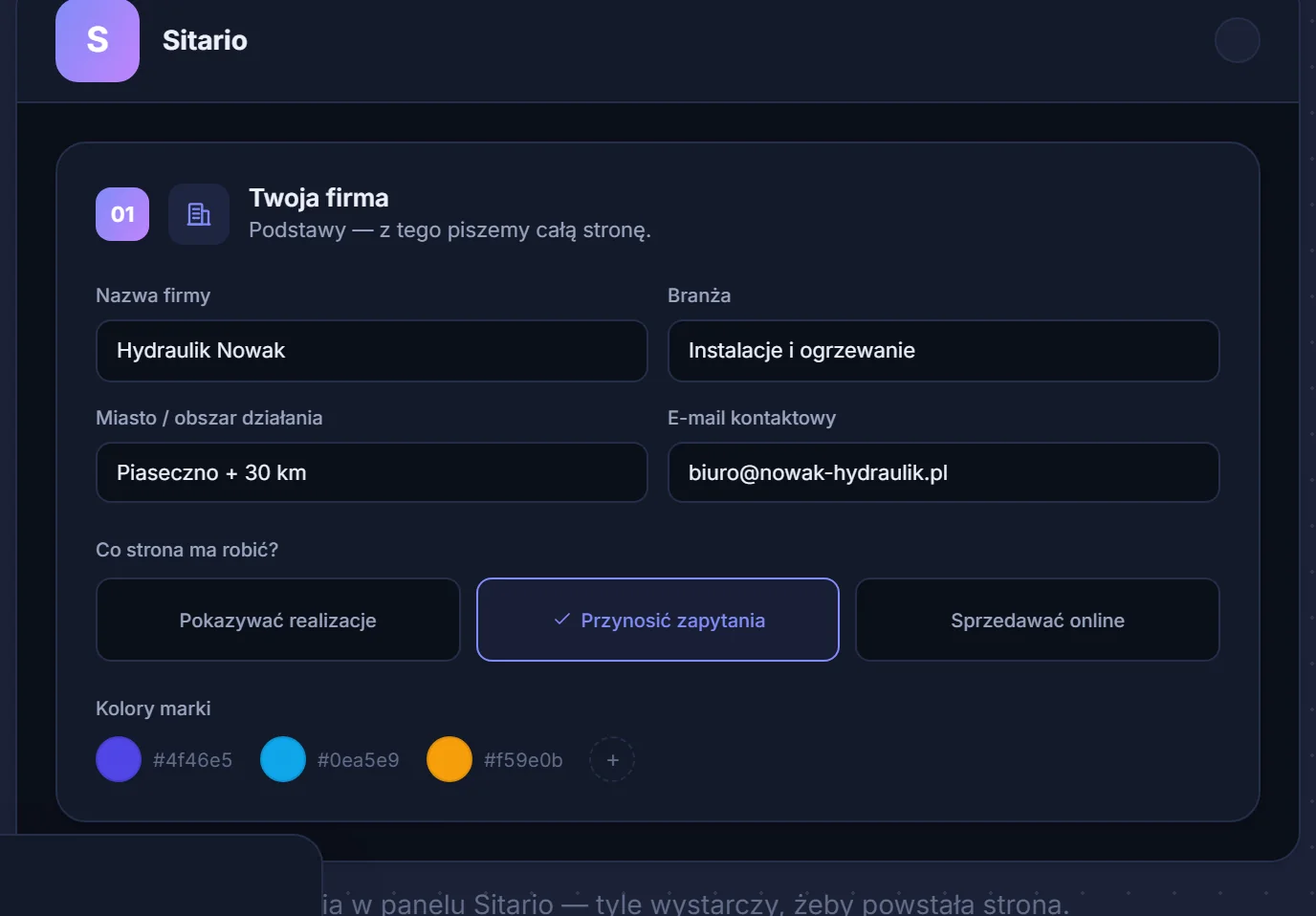
Name, industry, service area, contact details and an answer to what the site is supposed to do. Ten minutes of filling in fields — that is the owner's entire part in building the site.
My own product: a system that takes an order through a form, builds the site, registers the domain, publishes it and keeps running it — blog, statistics, ads — in one place. Below: why it exists at all and where it kept breaking.
Problem
The owner of a repair shop or a salon does not put off the website because they lack money for it. They put it off because they know how many hours the back-and-forth takes, and those hours would come out of the work that pays the bills. Time comes first, price second.
A brief, a meeting, mockup feedback, revisions, photo selection, then waiting. For a one-person business every one of those hours is an hour taken away from the work that actually earns money.
The domain at a registrar, hosting somewhere else, copy from a copywriter, ads at an agency, statistics in a fourth panel. Four invoices and four places where something can grind to a halt.
The contractor finishes the job and disappears. The site sits unchanged for three years, because the owner has no time to touch it and every change means finding someone first.
A do-it-yourself tool solves the vendor's problem, not the customer's. Rather than paying once, the owner becomes a part-time webmaster and never quite finishes the job.
Solution
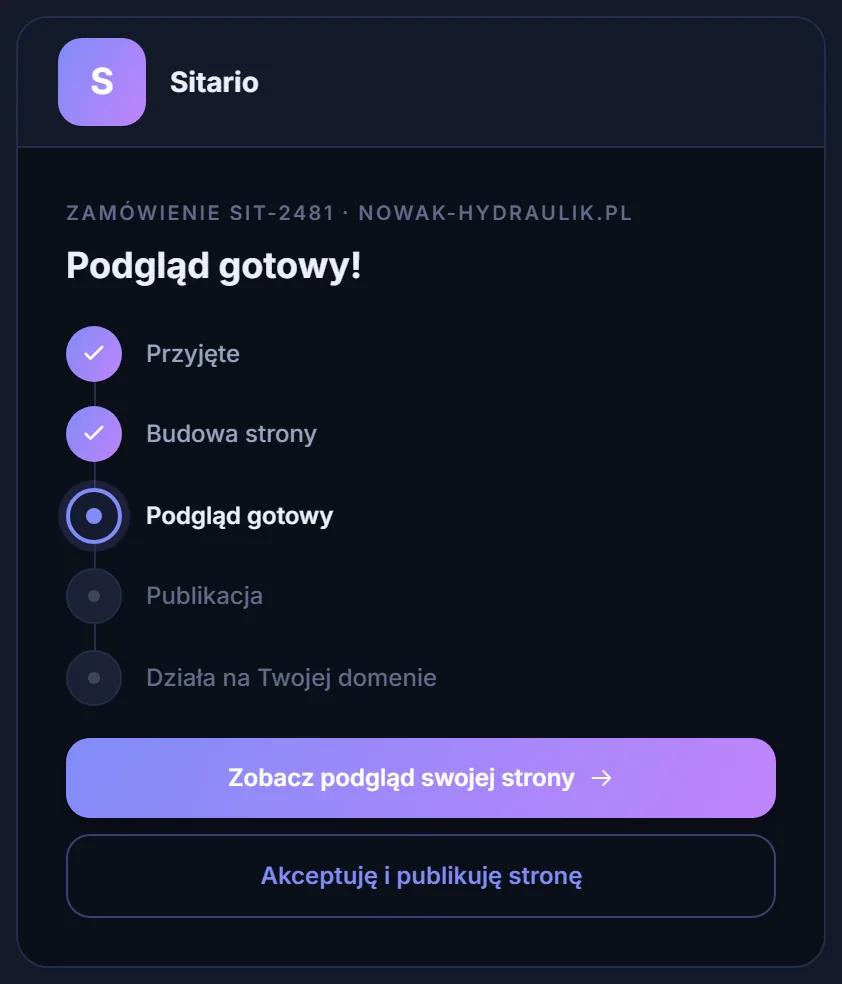
What remains is filling in the form and clicking "publish". The rest — research, copy, design, domain, certificate, email, publishing and day-to-day running — happens on the other side.
Name, industry, service area, contact details and an answer to what the site is supposed to do. Ten minutes of filling in fields — that is the owner's entire part in building the site.
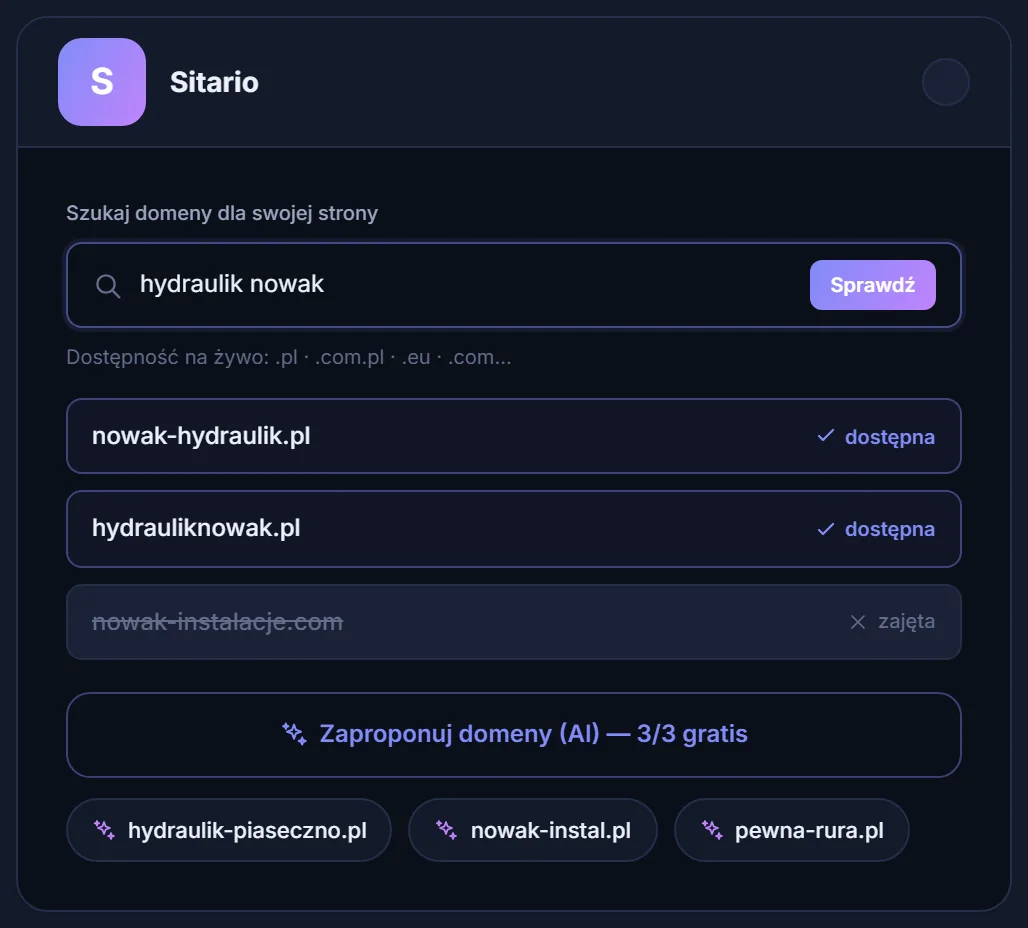
The search box checks availability live and suggests variants. Registration, DNS, the certificate and email are handled automatically — the owner never opens an account at a registrar.
The system researches the industry, picks colors, designs icons and arranges sections around the goal marked in the form. No two Sitario sites look the same.
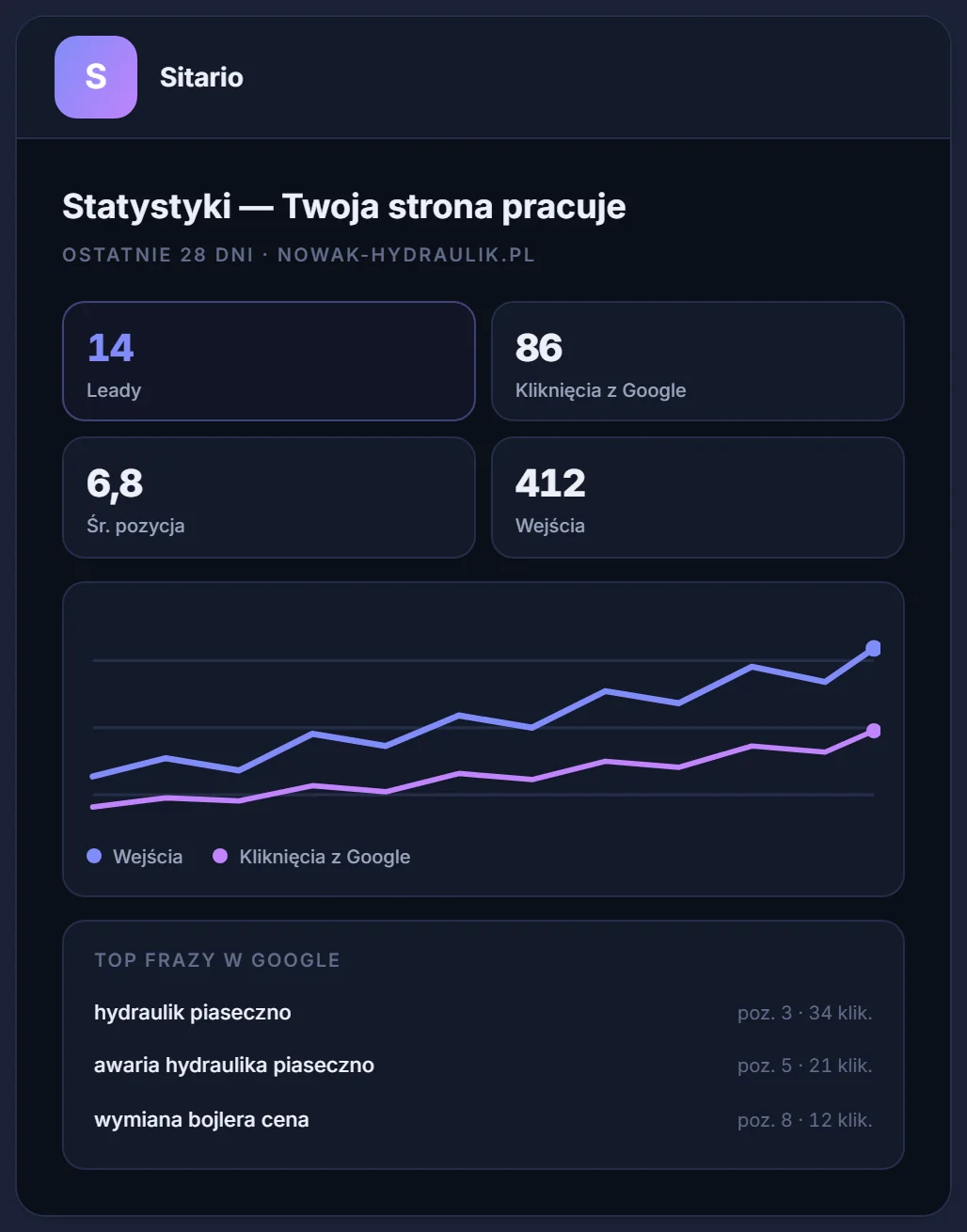
Blog articles, speed measurements, search-visibility recommendations, reviews pulled from the Google Business Profile, an ad campaign with weekly keyword tuning. All in one panel.
From the panel
Four screens from the live panel. The first is the only place that needs the owner's attention — the other three show what happens without them.
Quality
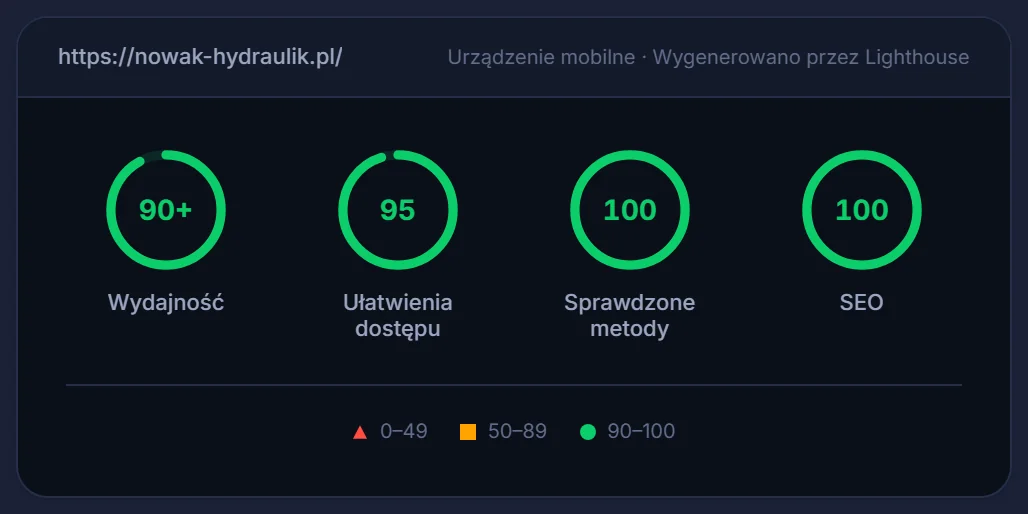
This is where solutions like this usually fall apart: if it takes an hour to build and costs a fraction of an agency's fee, surely it must be shoddy. That is why every published site goes through Google's speed measurement and the score lands in the owner's panel.
What was hard
What this means for you
An application where the user completes the whole journey without human contact needs more than a nice panel: every step has to be able to retry, report a failure and calculate its own cost before anyone pays. With Sitario I wired all of that together and have kept it running since launch.
If you have a process you run today over email and phone that could run on its own — tell me what it looks like. I will tell you what can be automated and what is better left to a person.
Related services
Sitario is a web application wired together with automations and an AI deployment. Below is the rest of what I build for companies, with starting prices.
Let's talk
Describe what it looks like today and where it jams most often. I will tell you what can be automated, roughly what the upkeep would cost, and where to start.